 Accessibility Statement
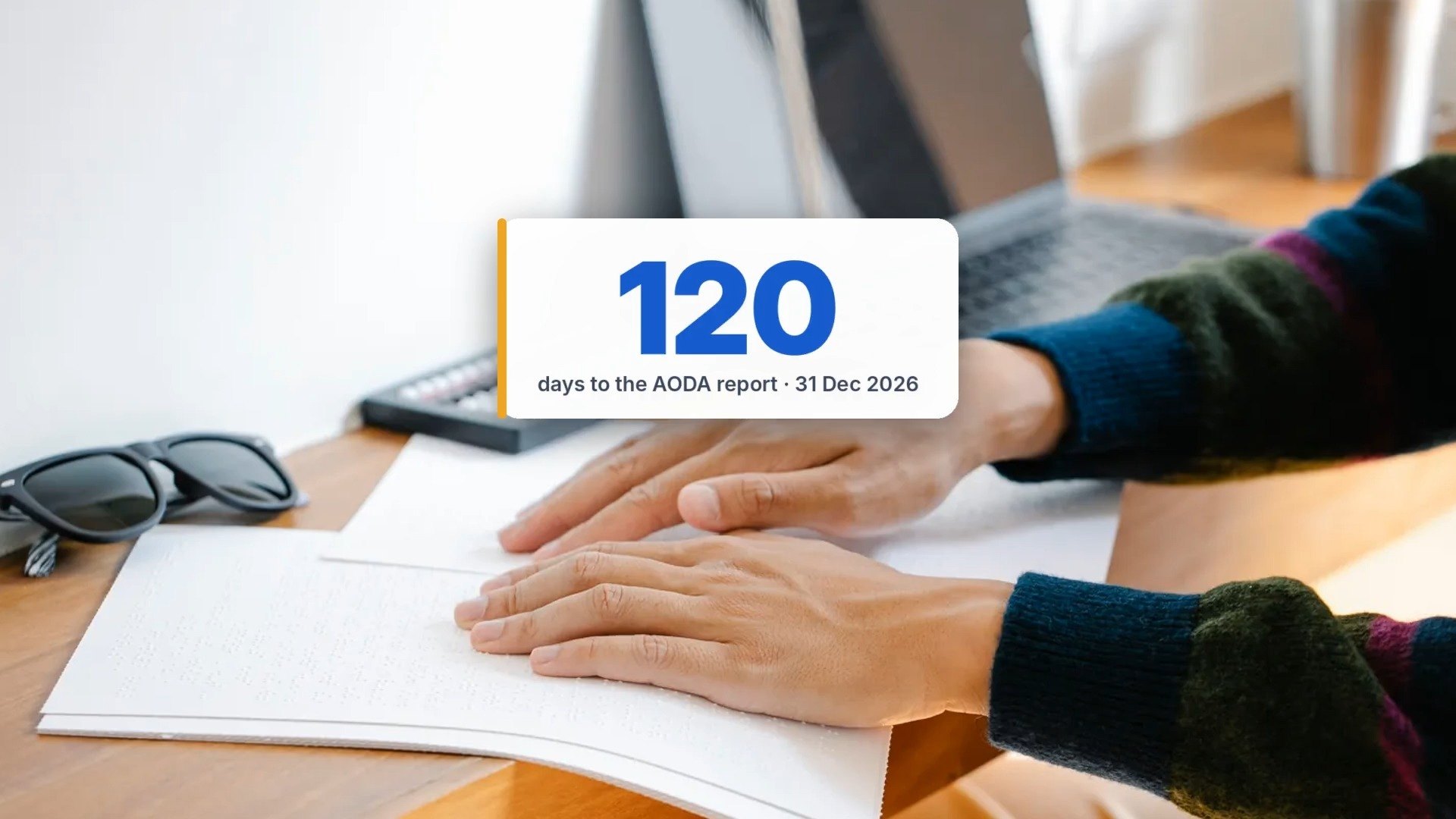
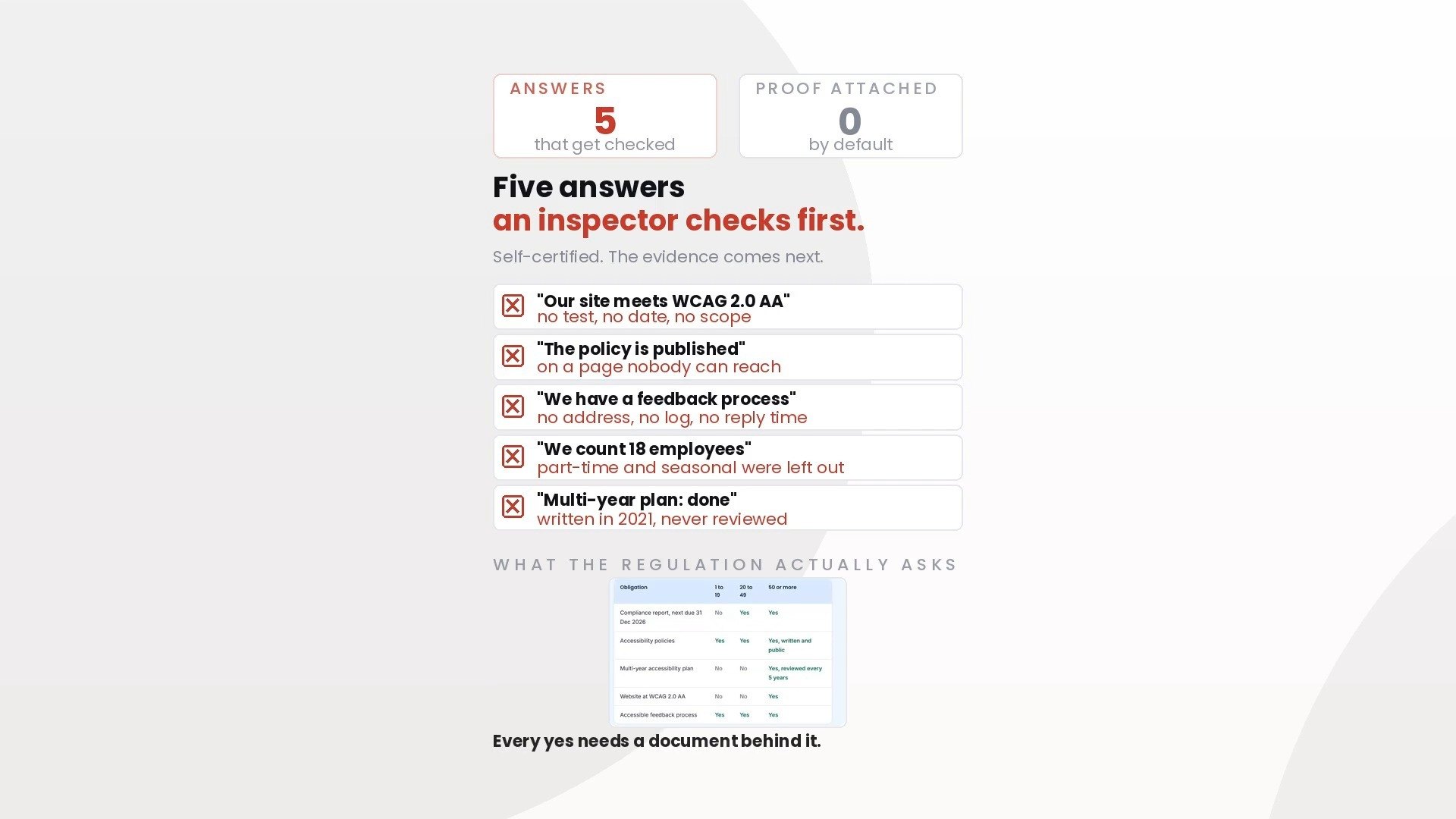
The AODA compliance report deadline is 31 December 2026. Private businesses and non-profit organizations with 20 or more employees in Ontario must file. Most attention goes to the website. The report's training section catches more organizations off guard than any technical finding.
A website can be remediated in two weeks. A training record cannot be written retroactively with any credibility.
What the compliance report actually asks about training
The report asks who was trained, on what, and when. "We cover accessibility in onboarding" is a statement of intention. "14 May 2026, 23 employees, modules covering the Integrated Accessibility Standards Regulation and the Human Rights Code as it applies to people with disabilities" is a record.
The difference matters because an inspector reading the filed report is looking for dates and numbers, not good intentions.
Who has to be trained
The obligation is wider than most organizations assume. It covers:
- All employees, full-time and part-time
- Volunteers
- Contracted staff who serve the public on the organization's behalf — reception, call-centre, and field staff
- Anyone who develops policies that affect customers, whether or not they ever meet one
- New starters, as soon as practicable after joining
That last requirement means training is a process, not a one-time event. A single session delivered three years ago does not cover staff hired since.
Three situations that show up repeatedly
Most organizations filing in 2026 are in one of these positions:
- Training happened somewhere, a few years ago, and no one can say who attended or on what date.
- Training never happened because the website felt like the real obligation.
- Training is booked for December, in the same fortnight as every other compliance task.
All three are recoverable before 31 December 2026. The first step in each case is the same: establish what documentation already exists and what the gaps are.
What a training record needs to show
A record that holds up to scrutiny contains:
- The date or dates training was delivered
- The number of people who completed it
- The content covered, referenced to the applicable standards
- A process for new starters going forward
Training itself can be delivered by an Ontario provider, or run internally using material the province makes available at no cost. The compliance report does not specify a delivery method. It specifies that training happened and that there is evidence of it.
Organizations with fewer than 20 employees in Ontario are not required to file a compliance report. The accessibility standards still apply to them, but the filing obligation and its training documentation requirement do not.
The person running onboarding in your organization is likely holding half the evidence already. They may not know it qualifies as part of the AODA record.
Key points
- The AODA compliance report due 31 December 2026 asks for training dates and headcounts, not website audit results.
- Training must cover all employees, volunteers, and contracted public-facing staff — and new starters as soon as practicable after joining.
- A record showing '14 May 2026, 23 people, modules on the IASR and the Human Rights Code' satisfies the requirement; a general onboarding reference does not.
- Organizations with fewer than 20 employees in Ontario do not file a compliance report, though the standards still apply.
- Training can be delivered by an Ontario provider or run internally using free provincial material — the report does not require a specific delivery method.
Frequently asked questions
What does the AODA compliance report ask about training?
It asks who was trained, on what, and when. The record must show specific dates, the number of participants, and the content covered — referenced to the Integrated Accessibility Standards Regulation and the Human Rights Code as it applies to people with disabilities.
Does AODA training apply to volunteers and contracted staff?
Yes. The obligation covers all employees, volunteers, and anyone serving the public on the organization's behalf, including contracted reception, call-centre, and field staff, as well as anyone who writes policies affecting customers.
When is the AODA compliance report due in 2026?
31 December 2026. It applies to private businesses and non-profit organizations with 20 or more employees in Ontario and is filed in the Accessibility Compliance Reporting portal.
What happens if training records are missing when we file?
The Accessibility Directorate of Ontario can inspect and issue orders. On conviction, a corporation faces fines of up to 100,000 dollars for each day an offence continues; directors or officers face up to 50,000 dollars a day.
Does an organization with fewer than 20 Ontario employees need to train staff under AODA?
The accessibility standards — including training requirements — apply from one employee. What changes at 20 employees is the obligation to file a compliance report documenting that training.