 Accessibility Statement
29 October. Sixty-three days to 31 December 2026, and in most Ontario companies the file is still waiting for one signature.
Not because the work is hard. Because nobody has decided whose name goes on it.
Three situations. One of them is yours.
A) Marketing commissioned the website, so everyone assumes Marketing owns this.
B) IT maintains the website, so everyone assumes IT owns it.
C) Legal was asked once, said "check with IT", and the thread died there.
Three people, one obligation, no owner. And a document with no owner is never signed.
Here is the part that unlocks it. The person signing is not certifying that your website is perfect. They are attesting to a short list of facts, in their own name:
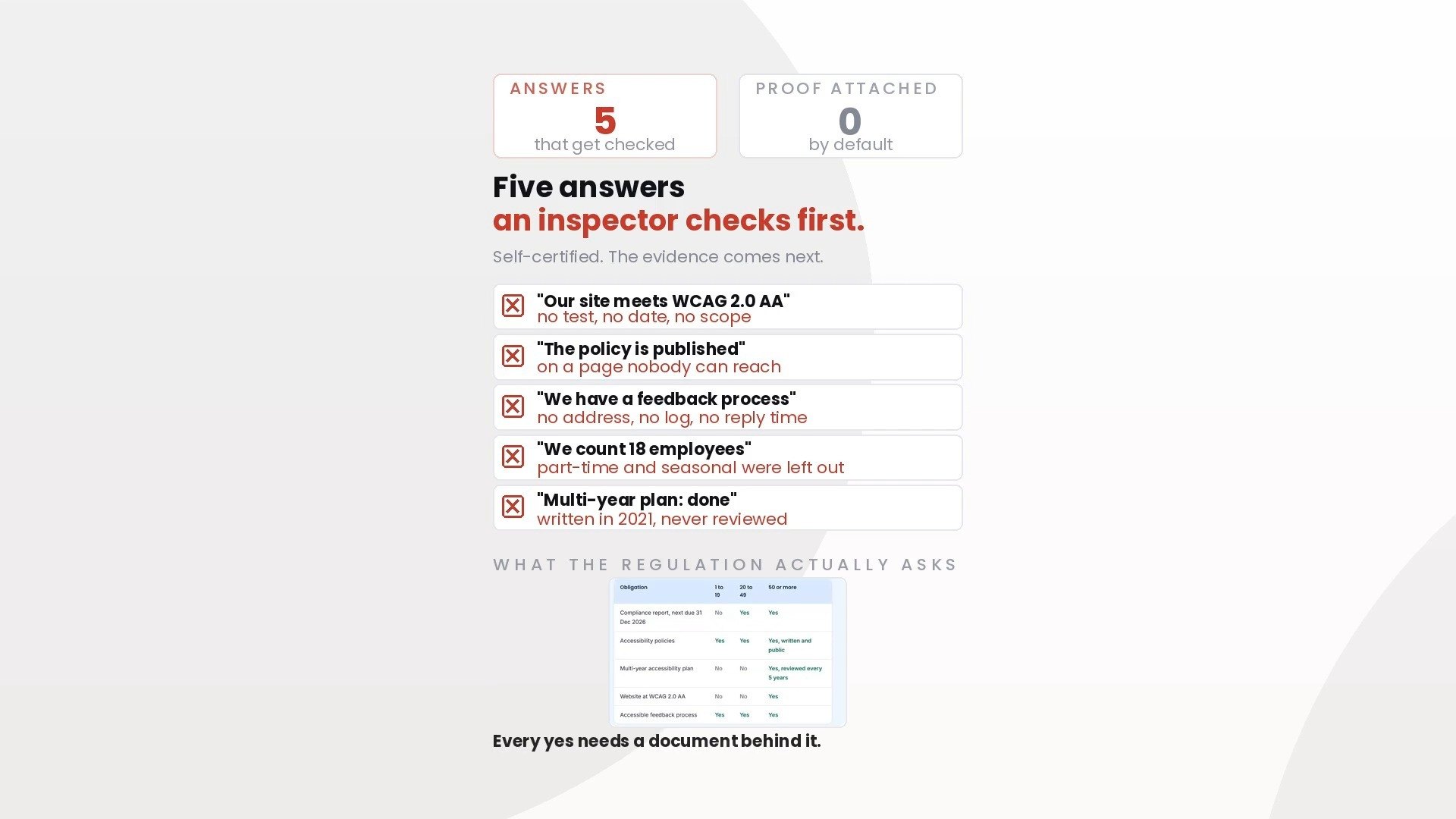
— a written accessibility policy exists, and people can find it
— training records exist, covering the standards and the Human Rights Code
— a feedback process exists and is logged
At 50 or more employees in Ontario, two more join the list: a multi-year plan, published and reviewed at least every five years, and public web content tested to WCAG 2.0 Level AA. Between 20 and 49 those two do not apply — worth knowing before anyone buys an audit they do not owe.
Nobody signs a sentence they cannot check. Put the document behind each line in front of the signer and a question that has circulated for a month is settled in ten minutes.
Who it usually is, in practice: a director, a CFO or an owner. Someone senior enough that the province treats the signature as binding, which is precisely why it is asked for.
Write A, B or C in the comments. I answer every one personally and tell you who in your structure should realistically be holding the pen.
Then send this to the person who built your website. They usually know exactly who has been avoiding the decision.
And the reason this matters more than it looks: on conviction the statutory ceilings are $100,000 a day for a corporation and $50,000 a day for a director or officer, personally. Almost nobody reaches that point — enforcement is graduated, starting with a reminder — but it explains why no sensible executive signs on a verbal assurance from two floors down. They are right not to. Give them the paper instead.